
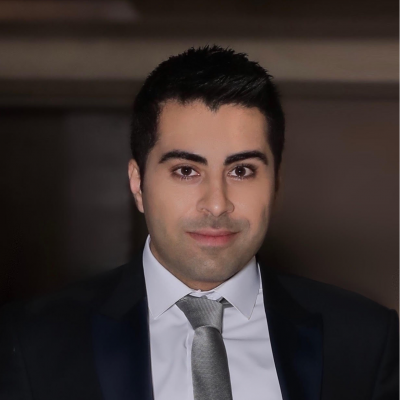
Ali Nouri
Senior System Safety Engineer Volvo CarsI am senior system safety engineer in Volvo Cars. I am working on safety concept and safety argumentation of self-driving function, and system. I am Sweden representative in ISO/PAS 8800 (Safety and Artificial Intelligence) and ISO/TS 5083 (safety for automated driving systems) working groups. In parallel I recently started my Industrial PhD in same area which is a collaboration between Volvo cars, Chalmers, and Zenseact about "Assuring Safety for Rapid and Continuous Deployment for Autonomous vehicles".
Main Day Two | Thursday, April 28, 2022
9:00 AM The Role of SOTIF and Safety in Protecting the AV Bubble
Failure of the car is not just a safety problem; it is a problem of brand image. The automotive industry cannot afford any errors.
Kick off day two with a look to the AV bubble. The AV industry is innovating at an unprecedented speed, but Level-4 AVs remain untamed.
Hear the necessity behind SOTIF in enforcing our accepted level of safety, testing and certainty in AVs, allowing for progressive testing and analysis in our road to level four vehicles in human scenarios.
- Should vs Must: the need for urgent action in implementing SOTIF and safety infrastructure in ADs and ADAS product design
- Appreciate the risk of putting products to market too early and causing unnecessary incidents
- The AV industry’s fate at the mercy of funding and the court of public opinion, the industry cannot suffer a major autonomous incident, or all hope is lost for all
9:50 AM Panel | Arguing for Sufficient Safety
When something is unknown, how are you going to accept the risks? Because risk is a measure of uncertainty.
Along with accepting residual risk is the concept of arguing for sufficient safety. Testing, analysis and evaluation will provide data and simulated scenarios to be considered in product design, but ultimately it comes down to the industry to debate what is sufficient.
Join fellow industry experts and debate the question: How good do we really have to be?
- At what point is safety considered good enough?
- How do you define good enough?
- What can we do to create a benchmark for sufficient safety?
- What technological advancements are needed in tightening the threshold for sufficient safety?
In Partnership With:

QUESTIONS?
Address: IQPC Ltd, 129 Wilton Road,
London SW1V 1JZ
Telephone: 44 (0) 207 368 9300
Fax: 44 (0) 207 368 9301
Email: enquire@iqpc.co.uk

©2026 IQPC. All rights reserved.