
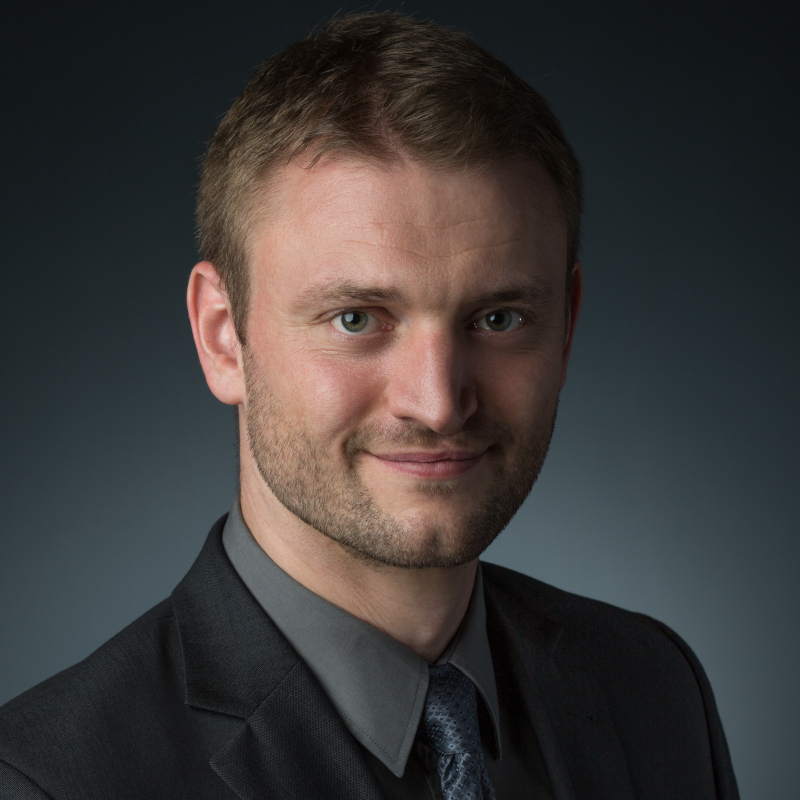
Dr Christian Schwarzl
Head of Dependable Systems Group - Electrics, Electronics and Software Virtual Vehicle Research CenterDr.
Christian Schwarzl began his career after finishing the Information and
Computer Engineering studies as researcher at Virtual Vehicle Research Center
in Graz. He started his computer sciences dissertation in parallel, which he
finished with honours in 2012. He became Lead Researcher in 2013 and managed
the activities in the field of verification and validation. Since 2014 he is head
of the Dependable Systems Group, which primarily focusses on the verification
and validation of autonomous vehicles, functional safety and security. Since
2016 he is active member of the ISO/TC22/SC 32/WG 8 committee for functional
safety and contributes to standards like ISO 26262 and ISO PAS 21448 – Safety
of the intended functionality.
Main Day One | Wednesday, April 27, 2022
2:15 PM SOTIF Validation Area 3: Evaluating Unknown Hazardous Scenarios
Unlike Area 2, Area 3 concerns unknown, unsafe hazardous scenario. Scenarios that are essentially infinite in scope provides a troubling task for validating a systems SOTIF.
After all, conducting SOTIF validation is not like building a table, repetition of the same task will not necessarily lead to the same results. A minor change in a simulation, or amendments to a scenario that is uncovered in the ADs or ADAS infrastructure can cause unintended, and potentially harmful consequences. So how can we prepare for infinite possibilities?
Join us to hear:
- Technical solutions at the forefront of testing Area 3 SOTIF evaluation of unknown hazardous scenarios
- Capabilities available to further cover hazardous beyond the production queue
- How to achieve sufficient security and knowledge that your components are acting as they should to mitigate risk
- Subsequent improvements in simulation technology to allow for further and more thorough testing in establishing component compliance
Main Day Two | Thursday, April 28, 2022
9:50 AM Panel | Arguing for Sufficient Safety
When something is unknown, how are you going to accept the risks? Because risk is a measure of uncertainty.
Along with accepting residual risk is the concept of arguing for sufficient safety. Testing, analysis and evaluation will provide data and simulated scenarios to be considered in product design, but ultimately it comes down to the industry to debate what is sufficient.
Join fellow industry experts and debate the question: How good do we really have to be?
- At what point is safety considered good enough?
- How do you define good enough?
- What can we do to create a benchmark for sufficient safety?
- What technological advancements are needed in tightening the threshold for sufficient safety?
In Partnership With:

QUESTIONS?
Address: IQPC Ltd, 129 Wilton Road,
London SW1V 1JZ
Telephone: 44 (0) 207 368 9300
Fax: 44 (0) 207 368 9301
Email: enquire@iqpc.co.uk

©2026 IQPC. All rights reserved.